


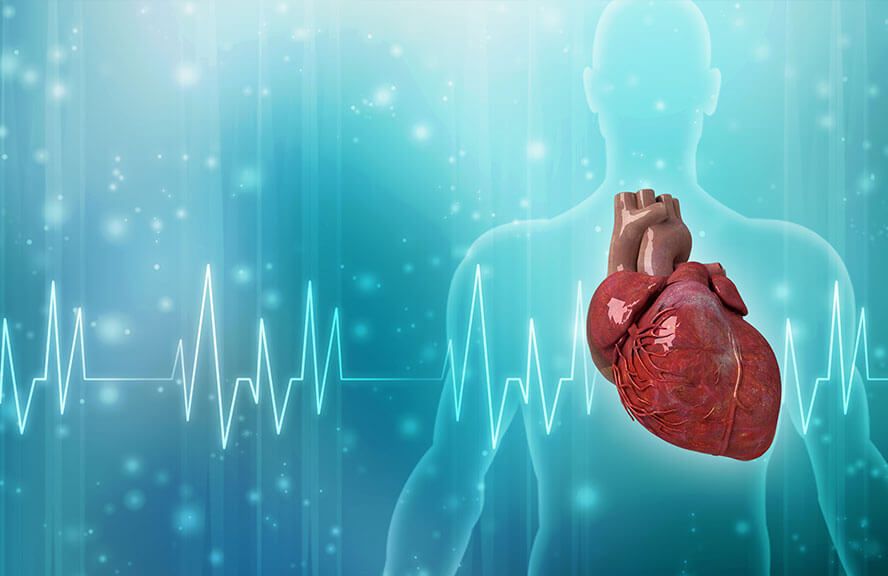
The purpose of cardiac function is to maintain the body’s vital functions by supplying the cells with oxygen and nutrients and removing useless or harmful products of metabolism and carbon dioxide produced by combustion.
The cardiovascular system is a circuit consisting of two separate circulations, placed in series: the systemic and the pulmonary circulation.
Blood is ejected from the left ventricle and transported to the systemic circulation (aorta, large and medium-sized arteries, etc.) for tissue irrigation and returns through the veins (small and large veins, etc.) to the right atrium and in the right ventricle. The blood ejected from the right ventricle is pushed through the pulmonary circulation (pulmonary artery, pulmonary capillaries, pulmonary veins) to the left atrium and left ventricle, thus completing the blood cycle.